Launching a Movement

Details

Role

Lead Designer

Services

Sub-Brand Architecture

Visual Identity

Icon System

Motion Graphics

Environmental Design

Print Collateral

PROBLEM

Investors in People needed a visual system for their annual conference that could function independently while maintaining clear connection to the parent brand. The identity had to work across every touchpoint—from pre-event social media promotion to on-site navigation to materials attendees would use throughout the multi-day event.

The challenge was twofold: create enough visual distinction to give the conference its own presence and authority, while ensuring attendees immediately recognised it as an Investors in People event. The system needed to prioritise function over decoration—attendees required clear wayfinding, session identification, and practical reference materials, not just aesthetically pleasing graphics.

STRATEGIC APPROACH

Rather than developing a decorative conference theme that would compete with the parent brand, I focused on building a systematic visual language rooted in clarity and utility. The approach centred on respecting Investors in People's established brand equity—their colour palette of magenta pink, navy blue, and cream, plus their signature smile element—while introducing new visual components that could carry the conference identity.

The strategy was to create a modular system that could scale across all applications: environmental graphics that needed to be readable from distance, printed materials attendees would actually use and carry, digital content for social media promotion, and branded collateral that extended the conference experience beyond the event itself.

SOLUTION

Conference Identity

The conference name—"Make Work Better"—wraps around Investors in People's smile mark in a circular lockup, incorporating the parent brand's key visual element while establishing independent recognition. The wordmark uses their established typography and color system, ensuring immediate brand connection while functioning as a standalone conference identifier.

Icon System

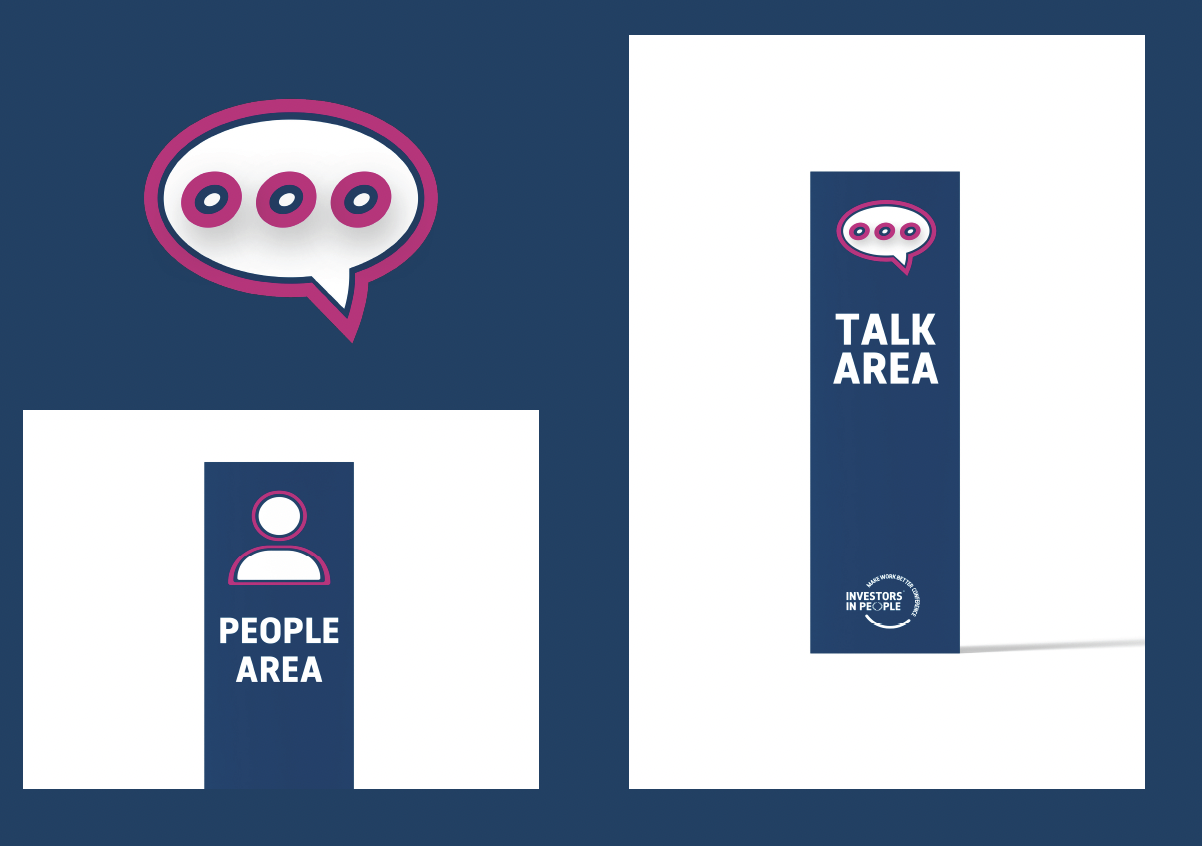
Developed a set of workplace-themed icons using a distinctive double-stroke style (magenta outer ring, navy inner stroke on cream background) that extended the visual language across all applications. Icons included microphones, speech bubbles, network connection symbols, and people markers—each designed to be instantly readable at environmental scale while maintaining visual consistency.

These icons served functional purposes throughout the conference: wayfinding signage, session identification, room markers, promotional materials, and environmental graphics. The systematic approach meant every visual element reinforced the same visual language, building recognition and clarity across the entire attendee experience.

Environmental Graphics

Applied the identity system across comprehensive conference infrastructure. Large-scale wall graphics used the icon system and colour palette to create visual interest while serving practical navigation purposes. Registration desk branding, directional signage, session room markers, and stage backdrops all worked within the unified visual system. Wayfinding prioritised legibility and instant recognition—attendees needed to find rooms quickly, not admire graphics.

Motion Graphics

Created animated versions of the icon system for social media promotion and digital channels. Animated logo reveals, event invitations, and promotional content extended the static identity into dynamic applications. All motion content used the established colour palette and icon system, maintaining brand consistency across digital touchpoints.

Pocket Booklet

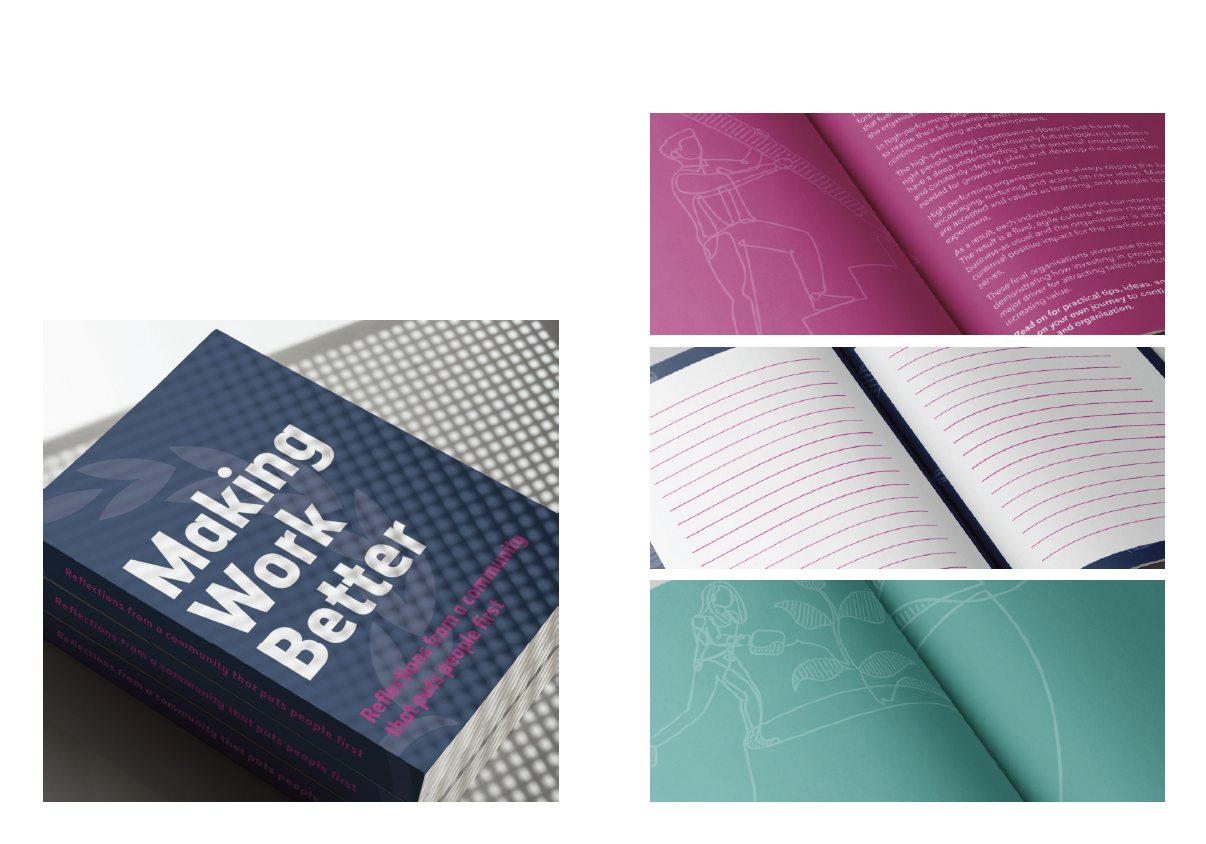
Designed a compact reference guide sized to fit in a standard jacket pocket, ensuring attendees would actually carry and use it throughout the conference. The booklet featured:

  • Line illustration backgrounds in the brand colour palette (magenta, teal, navy)
  • Information about workplace improvement topics and conference content
  • Lined note pages for attendees to capture key takeaways
  • Complementary branded pens

The pocket format was deliberate—conference materials are often too large to be practical, resulting in attendees leaving them at their seats. By making it genuinely portable, the booklet became a functional tool rather than decorative collateral.

Branded Collateral

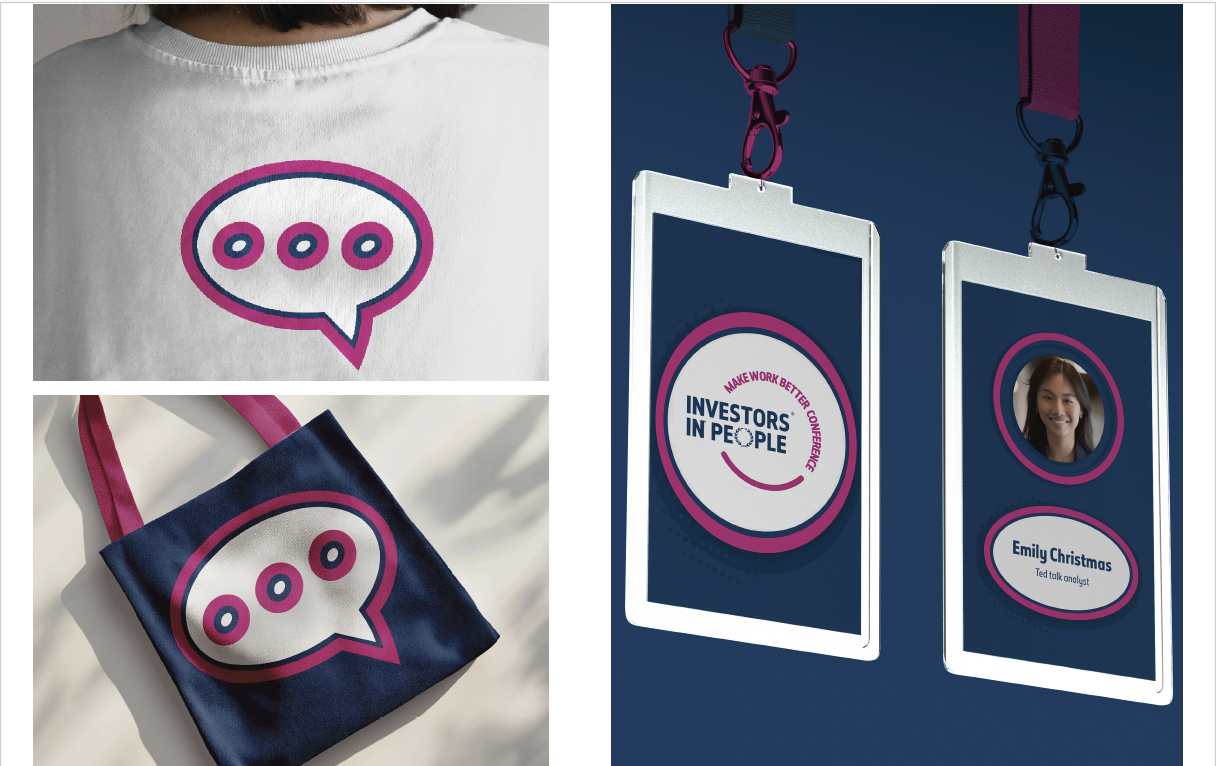
Extended the visual system across tote bags, t-shirts (featuring the icon graphics), business cards, and other promotional materials. Each piece reinforced brand consistency while serving practical purposes—bags carried materials, apparel created visual unity among attendees, cards facilitated connections.

Marketing collateral 1
Marketing collateral 2
Marketing collateral 3
Marketing collateral 4
Marketing collateral 5

KEY DESIGN DECISIONS

Function over decoration

Every design element needed to serve attendee experience first. Signage prioritised wayfinding efficiency over visual impact. Materials were designed for actual use, not just aesthetic appeal.

Systematic consistency

Rather than creating one-off graphics for each application, the icon system and colour palette created a modular toolkit that could flex across contexts while maintaining immediate recognition.

Practical materiality

The pocket booklet's format was driven by utility—small enough to carry, durable enough to withstand multi-day use, with lined pages that invited note-taking rather than just presenting static information.

Brand respect

The solution honoured Investors in People's established visual identity by incorporating their smile element, using their exact colour palette, and maintaining their typographic approach—creating distinction through systematic application rather than stylistic departure.

Scalability

The visual system needed to work at environmental scale (large wall graphics, stage backdrops) and at intimate scale (pocket booklet, business cards) with equal clarity and impact.

DELIVERABLES

  • Conference sub-brand identity system
  • Custom icon set (workplace-themed)
  • Motion graphics (logo reveals, event invitations, social media content)
  • Environmental design (registration desk, wayfinding signage, directional markers, session identifiers, stage backdrops, wall graphics)
  • Pocket-sized conference booklet (with line illustrations, content pages, note pages, complementary pens)
  • Branded collateral (tote bags, t-shirts, business cards)
  • Brand application guidelines for conference use

OUTCOME

The conference identity successfully balanced independent presence with parent brand connection. The systematic approach meant the visual language remained consistent across every touchpoint—from social media promotion weeks before the event to wayfinding signage attendees navigated on-site to the pocket booklet they referenced throughout sessions.

Client and attendee feedback confirmed the design served its primary purpose: creating a cohesive, elevated experience that helped people navigate the conference efficiently while feeling part of a unified event. The pocket booklet proved particularly successful—attendees actually used it rather than abandoning it, validating the decision to prioritize practical utility over decorative impact.

The sub-brand architecture established a scalable template for future annual conferences, demonstrating that effective event design should enhance experience rather than simply decorate spaces.